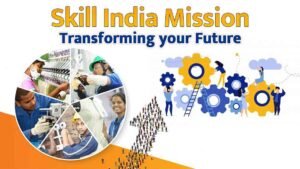
India stands at the cusp of a demographic dividend, with one of the largest young populations in the world. But while the potential is immense, many youth from underserved communities lack access to the training and opportunities required to thrive in today’s competitive job market. That’s where government-backed skill development programs play a transformative role.
The Need for Skill Development
The rapid pace of industrial change and digital transformation has created new demands in the job market. Traditional degrees alone are no longer sufficient — employers seek hands-on skills, industry exposure, and job-readiness. However, millions of youth, especially school and college dropouts, remain unemployed due to limited access to such training.
The Government’s Role
To address this challenge, the Government of India has launched various initiatives like:
- PMKVY (Pradhan Mantri Kaushal Vikas Yojana)
- DDU-GKY (Deen Dayal Upadhyaya Grameen Kaushalya Yojana)
- PM Vishwakarma Yojana
- Suryamitra Skill Development Program
- NULM (National Urban Livelihoods Mission – EST&P)
These programs are designed to equip candidates with practical skills across sectors like construction, electronics, retail, agriculture, healthcare, hospitality, and more. Many of them also offer financial assistance, free toolkits, certification, and job placement support.
Our Role in the Ecosystem
As a skilling partner empaneled under various Sector Skill Councils (like ASCI, RASCI, BFSI, TSSC, DWSSC), we work under these schemes by implementing government-awarded projects. We don’t offer commercial courses — instead, we train, certify, and place eligible candidates entirely under state or central government mandates.
Success Stories
From a dropout turning into a certified solar technician under the Suryamitra program, to a village artisan growing her tailoring business with support from the PM Vishwakarma Yojana — we’ve witnessed countless lives change through skill development.
Looking Ahead
With India’s growing emphasis on “Skill India” and “Make in India,” the future of vocational training looks promising. The goal isn’t just employment — it’s empowerment, self-reliance, and sustainable livelihoods.
Conclusion
Skill development isn’t just a policy initiative — it’s a national priority. And through our work under these schemes, we’re committed to ensuring that every individual has the tools they need to succeed.